





Gregory Kielma • April 28, 2024
This is a subtitle for your new post
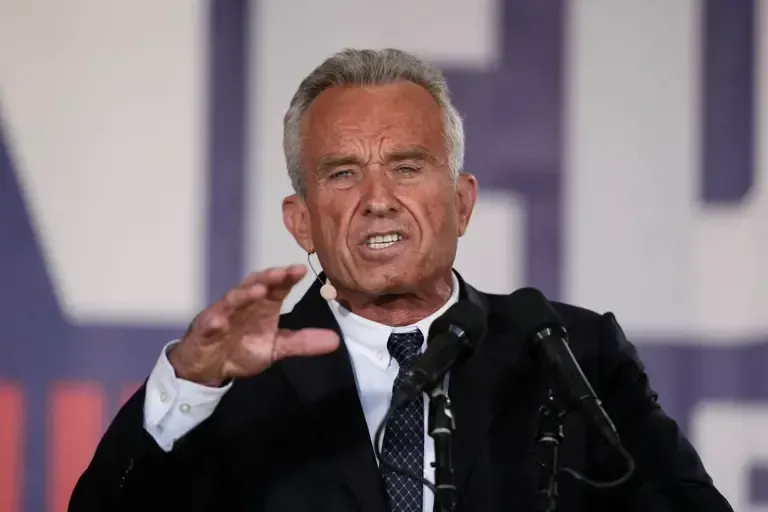
RFK/Trump Car Barred from Indy 500 Racing
"First and foremost, this is not a political website" says FFL and Firearms Instructor Gregg Kielma. I do however believe in free speech and the right to protest peacefully. I believe in the Constitution of The United Sates of America. In my humble opinion this isn't right. Indy Car should not dictate who and what can advertise. Just my humble opinion. Please read the article below.
Story by Preksha Sharma
The top racing series in America said no to one team’s plan to use a strange combination of Robert F. Kennedy, Jr. and Donald J. Trump logos for the big race next month, as reported by Racer.
Just so you know, it’s election year in 2024, and the series doesn’t want to get mixed up in politics. The Indianapolis 500 is the series’ most important race, with about 300,000 fans showing up every year. If they allowed the RFK/Trump logos, it might have looked like they were supporting those candidates.
An IndyCar spokesperson told Racer, “IndyCar does not approve sponsorships associated with elected officials, candidates for political office or political action committees.”
They didn’t say which team or driver wanted to use the RFK/Trump logos, but there’s only one person in the lineup who would do something like that. Santino Ferrucci, who races for A.J. Foyt Racing, has tried similar things before.
He once tried to use a “Make America Great Again” logo in Formula 2, but he got kicked out for crashing into his teammate on purpose. He’s 25 years old and came third in the 500 last year. He’s the type who might support RFK, Jr. and Trump, even though Trump is dealing with legal problems.
The race on May 26 is the 108th time they’re doing it, and it’s always the biggest single-day sports event. IndyCar is being smart by staying away from politics, especially in this race. No matter what they do, they’re going to upset some people. If they want to keep growing their fanbase, they should avoid doing anything that might make more than half the country upset.

Marijuana and The Law: The Laws are Changing But When and How? Gregg Kielma 4/27/2026 Many people are confused about how marijuana use interacts with federal firearm law, especially as more states legalize cannabis. Under federal statute 18 U.S.C. § 922(g)(3), anyone who is an unlawful user of a controlled substance is prohibited from possessing firearms or ammunition, and marijuana remains a Schedule I controlled substance, for now, under federal law even in states where it’s legal. That means regular, ongoing marijuana use can place someone in a prohibited category, though recent ATF rule changes require evidence of consistent, current use rather than a single incident. At the same time, courts are actively reviewing how this law applies, and the Supreme Court is considering cases that challenge whether the federal ban is constitutional when applied to marijuana users. The legal landscape is evolving and enforcement varies, concerns about someone’s behavior are best handled by focusing on safety, communication, and lawful reporting of specific dangerous actions—not assumptions about their private habits. If someone is acting in a way that poses an immediate threat to themselves or others, contacting local authorities to report the behavior—not their status—is the appropriate and lawful step. Gregg Kielma

Gun Rights Group Files Brief To Rebut DOJ’s Misleading Arguments In NFA Challenge Mark Chesnut Arguments by the Trump Administration’s Department of Justice for continuing the registration portion of the National Firearms Act (NFA) now that the tax has been eliminated have drawn the ire of a major gun-rights group. Congress killed the $200 tax on suppressors, short-barreled rifles (SBRs), short-barreled shotguns (SBSs), and any other weapons (AOWs) when it passed President Donald Trump’s One Big Beautiful Bill last summer. Gun-rights groups immediately filed a handful of lawsuits challenging the remainder of the NFA, and the DOJ is unexpectedly fighting those lawsuits, despite the administration’s promise to battle anti-Second Amendment laws. In one of the cases, Brown v. ATF, the Second Amendment Foundation (SAF) recently filed a supplemental reply brief countering the federal government’s arguments in support of the NFA. “This reply brief gave us the perfect opportunity to rebut the government’s arguments in support of the NFA,” Bill Sack, SAF director of legal operations, said in a news release announcing the filing. “We were encouraged the court requested targeted supplemental briefing that addressed key elements of the proper Second Amendment analysis. In our principle brief, we laid out in detail why the answer to every question posed supported our position. And now with this reply brief, we have driven home the point and dismantled each of the government’s arguments to the contrary.” In the brief, FPC argued that the government used incorrect reasoning in its argument about which arms are “in common use” and which are not. And in doing so, pointed out the government’s inability to address the second Bruen standard.

Why Do People Enjoy “The Firearm Sports” and why "Do People Want to Take Our Firearms Away From Law Abiding, Responsible People" Gregg Kielma Tactical K Training and Firearms 4/26/2026 Kielma states, "This debate has lasted for years. The gun control community wants to end our sport and hobby because, in their view: • We're bad people for owning guns. • We're irresponsible. • They don't want anyone armed. • They're afraid of what they don't understand. • They don't appreciate shooting as a sport." I do know this, people enjoy firearm sports because they offer a rare combination of discipline, focus, and personal growth that few activities can match. Whether it’s precision rifle, trap, or action shooting, these sports demand calm breathing, steady hands, and clear mind skills that build confidence and carry over into everyday life. The community is another major draw: responsible gun owners tend to be safety driven, respectful, and eager to help newcomers succeed. For many, the range becomes a place of mentorship, family bonding, and lifelong learning. At the same time, debates about firearms often create tension, and some lawmakers and advocacy groups argue for stricter regulations because they believe it will reduce crime or increase public safety. Others, however, feel these efforts unfairly target the very people who follow the law, train regularly, and store their firearms responsibly. From that perspective, it can feel as though responsible owners are being lumped together with criminals, even though their behavior, mindset, and values are completely different. This disconnects between those who see firearms as a disciplined sport and personal responsibility, and those who view them primarily through the lens of risk drives much of the ongoing debate. Gregg Kielma

Ammunition Quality and Why It Matters: Let’s Take a LOOK! Gregg Kielma Tactical K Training and Firearms 4/26/2026 Ammunition matters because it is the heart of every firearm’s performance, safety, and purpose. It determines how reliably a firearm functions, how accurately it shoots, and how responsibly we use it in training, hunting, or self-defense. Ammunition is far more than a simple component it is a complete system made up of the bullet, casing, primer, and propellant, each playing a critical role in how a round ignites, burns, seals the chamber, and ultimately sends a projectile downrange. When the primer ignites the propellant, rapidly expanding gases push the bullet through the barrel at high velocity, and the design of each component influences accuracy, recoil, and terminal performance. From a practical standpoint, choosing the right ammunition is essential for safety and effectiveness. Different tasks demand different types of rounds: full metal jackets for training, hollow points for self-defense due to controlled expansion, soft points for hunting, and specialized loads for shotguns depending on the game or purpose. Using the wrong ammunition can damage a firearm, cause malfunctions, or create dangerous over penetration risks. Matching ammunition to the firearm’s caliber and intended use is a foundational responsibility for every gun owner. Ammunition also matters because it directly affects ethical and responsible shooting. Hunters rely on rounds that deliver clean, humane results. Instructors and competitors depend on consistent, reliable ammunition to build skill and confidence. Law abiding citizens who carry for protection choose ammunition designed to stop a threat while reducing unintended harm. Every one of these decisions reflects a commitment to safety, discipline, and respect for the power we hold. Beyond performance, ammunition carries legal and regulatory significance. Caliber classifications, bullet types, and even certain expanding rounds are regulated in various jurisdictions. Proper identification and understanding of ammunition types support compliance, safe storage, and responsible ownership. Kielma’s Parting Shot: Ammunition matters because it represents the evolution of firearms themselves. From ancient projectiles to modern engineered cartridges, advancements in ammunition have shaped accuracy, reliability, and capability across civilian, sporting, and military contexts. Understanding ammunition isn’t just technical knowledge it’s part of being a responsible, informed firearm owner who values safety, precision, and the discipline that comes with training. Gregg Kielma
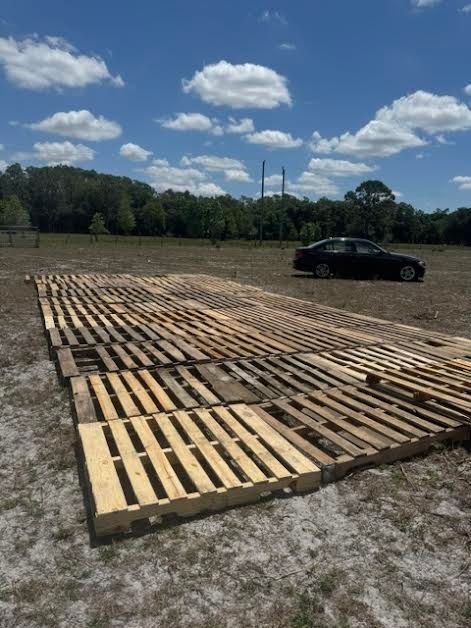
My Private 150 Yd Range Base is Down! The Plan Comes Together! Gregg Kielma 4/25/1016 Friday afternoon, 4/24/2026, I put in a solid 6 hours leveling and laying down the base that will support the shooting platform for my 150‑yard range. It was one of those jobs that looks simple, until you’re knee‑deep in it, but the base is in and ready for the next step. The plywood deck goes in on May 9th, along with the outdoor carpet that will be applied to the decking, and once that’s done, the platform will finally be completed. Note to self: sugar sand will absolutely get your truck stuck—ask me how I know. LOL Gregg Kielma

Macon Offenders Guilty in ATF Firearms Trafficking Investigation Friday, April 24, 2026 U.S. Attorney's Office, Middle District of Georgia Thirty Firearms Seized, Including a Machinegun and Conversion Devices, Plus Illegal Drugs MACON, Ga. – Three Macon offenders, two with prior felony convictions, have been held accountable at the federal level for their roles in an illegal firearms and drug trafficking network as part of a larger Bureau of Alcohol, Tobacco, Firearms and Explosives investigation in the community. Brandon Thorpe, 32, of Macon, pleaded guilty to one count of possession of a firearm by a convicted felon on April 23. Thorpe faces a maximum sentence of 15 years in prison to be followed by three years of supervised release and a maximum $250,000 fine. His sentencing hearing will be scheduled by the Court. Lonnie Alexander, 44, of Macon, pleaded guilty to one count of distribution of 50 grams or more of methamphetamine on April 21. Alexander faces a mandatory minimum of ten years in prison and a maximum sentence of life in prison to be followed by at least five years of supervised release and a maximum $10,000,000 fine. His sentencing is scheduled for July 9. John Cato, 25, of Macon, was sentenced to serve 15 years in prison to be followed by three years of supervised release on Feb. 5, 2026, after he pleaded guilty to firearms trafficking on Nov. 19, 2025. U.S. District Judge Marc Treadwell is presiding over the cases. There is no parole in the federal system. “High-capacity firearms and ammunition, including a machinegun, were removed from the streets of Macon and the defendants were held accountable for their crimes as a result of this ATF-led investigation,” said U.S. Attorney William R. “Will” Keyes. “Our office is working in close partnership with local, state and federal authorities to uphold the law and make every community we serve safer.” “ATF remains committed to identifying and dismantling criminal networks trafficking firearms that fuel violent crime in our communities,” said ATF Resident Agent in Charge Robert W. Davis. “This case underscores our relentless focus on repeat offenders who illegally sell guns and narcotics, putting lives at risk. We will continue working alongside our law enforcement partners to ensure those who threaten public safety are held accountable.” According to court documents and statements in court, ATF agents learned in March 2024 that Alexander, a convicted felon, was illegally selling firearms and narcotics in Macon and opened an investigation. Between April 2024 and April 2025, Alexander was recorded carrying out multiple illegal sales of guns and drugs at locations around Macon, including within 1,000 feet of Mercer University’s campus on April 23, 2024. During that transaction, Alexander distributed over 27 grams of cocaine to an individual in the parking lot of Towne Place Suites, near Mercer University’s campus. Alexander sold over 40 grams of cocaine at different times earlier that month. On May 22, 2024, an individual who had previously told Alexander that he was a convicted felon and that he wanted a gun for drug trafficking, purchased a 9mm pistol with a magazine and three rounds of ammunition during a transaction arranged by Alexander at his Macon home. The following day, an individual bought a loaded 9mm pistol from an associate of Alexander’s, with Alexander receiving a “finder’s fee” for arranging the sale. On September 12, 2024, an individual bought a 9mm pistol in a transaction arranged by Alexander at a gas station in Macon. Later that day, the individual bought a .38 special revolver and over 15 grams of methamphetamine from Alexander at an apartment complex in Macon. On April 23, 2025, Alexander arranged a sale of firearms and methamphetamine to an individual in a restaurant parking lot in Macon. During the transaction, Alexander sold over 80 grams of methamphetamine, and Cato sold three firearms to the individual, including a machinegun. On May 20, 2025, Cato sold seven firearms and a 50-round drum magazine to an individual in a restaurant parking lot in Macon. On June 26, 2025, Thorpe drove Cato to a parking lot in Macon, carrying a dozen firearms, including a Glock switch, which converts a semi-automatic pistol into a machinegun. Cato intended to sell the firearms to an individual. The individual purchased all the firearms from Cato. On July 9, 2025, Cato arrived at a parking lot in Macon to sell a convicted felon firearms and promethazine, a sedative. As ATF agents surrounded Cato’s car, Cato ran into oncoming traffic on Riverside Drive. The agents soon caught and arrested him. Inside Cato’s car were four firearms, two of which had been reported stolen, and 192 ounces of promethazine. In all, ATF seized 30 firearms. Cato is responsible for trafficking 26 firearms; of those 26 firearms, Thorpe is responsible for possessing 12 of them. ATF seized four illegal firearms from Alexander. The firearms included a machinegun, conversion devices, and stolen guns. In addition, ATF seized more than 67 grams of cocaine and more than 100 grams of methamphetamine from Alexander, and 192 ounces of promethazine from Cato. Alexander and Thorpe each have previous felony convictions. Thorpe also had an active warrant from another county at the time of his arrest. It is illegal for a convicted felon to possess a firearm. This case is part of Operation Take Back America, a nationwide initiative that marshals the full resources of the Department of Justice to repel the invasion of illegal immigration, achieve the total elimination of cartels and transnational criminal organizations and protect our communities from the perpetrators of violent crime. The case was investigated by ATF. Assistant U.S. Attorney Hannah Couch is prosecuting these cases for the Government. Updated April 24, 2026
Leader of Gun Dealing Ring Sentenced to over 17 Years in Prison for Selling More Than 500 Guns in California Thursday, April 23, 2026 U.S. Attorney's Office, Eastern District of California SACRAMENTO, Calif. — Jerrell Lawson, 35, of Sacramento, was sentenced today by U.S. District Judge Daniel J. Calabretta to 17 years and five months in prison for his convictions for conspiracy to unlawfully deal in firearms, unlawfully dealing in firearms, transferring a firearm to an out-of-state resident, unlawful mailing of a firearm, and being a felon in possession of a firearm, U.S. Attorney Eric Grant announced. According to court documents, between November 2019 and March 2022, Lawson arranged to buy more than 500 firearms in Georgia and ship them into California, where his sub-distributors sold them on the streets. In total, Lawson and his co-conspirators paid more than $300,000 to purchase those firearms. Lawson would broker firearms transactions in Georgia over the internet, and co-defendant Malek Williams, a Georgia resident with a license to carry a concealed firearm, would pick up firearms in person and mail the firearms to various locations in California at Lawson’s direction. Some of the firearms went to individuals who are prohibited from possessing firearms due to prior felony convictions. Some of the guns were also particularly dangerous: machine guns and guns with “drums” designed to hold dozens of rounds of ammunition. The investigation began when a firearm used in a violent shooting in California was traced to Georgia, then to Lawson’s organization. Law enforcement learned Lawson and his co-conspirators used coded language to traffic firearms and moved money using a variety of financial institutions. During the investigation, interdicted packages destined for Lawson and other co-conspirators were found to contain firearms, ammunition, knives, and brass knuckles, among other things. In August 2023, a grand jury charged Lawson and nine co-defendants with various firearms offenses relating to this interstate firearm dealing ring. All of Lawson’s co-defendants have pleaded guilty and been sentenced. This case is the product of an investigation by the Bureau of Alcohol, Tobacco, Firearms and Explosives, U.S. Postal Inspection Service, the San Francisco Bay Area/Sacramento Region Cross-Jurisdictional Firearms Trafficking Strike Force Initiative and a number of other state, local, and federal agencies. Assistant U.S. Attorneys Ross Pearson and Justin Lee are prosecuting the case. This case is part of the Homeland Security Task Force (HSTF) initiative established by Executive Order 14159, Protecting the American People Against Invasion. The HSTF is a whole-of-government partnership dedicated to eliminating criminal cartels, foreign gangs, transnational criminal organizations, and human smuggling and trafficking rings operating in the United States and abroad. Through historic interagency collaboration, the HSTF directs the full might of United States law enforcement towards identifying, investigating, and prosecuting the full spectrum of crimes committed by these organizations, which have long fueled violence and instability within our borders. In performing this work, the HSTF places special emphasis on investigating and prosecuting those engaged in child trafficking or other crimes involving children. The HSTF further utilizes all available tools to prosecute and remove the most violent criminal aliens from the United States. HSTF Sacramento is composed of agents and officers from Homeland Security Investigations, the Federal Bureau of Investigation, the Drug Enforcement Administration, Northern California High Intensity Drug Trafficking Area, Central Valley High Intensity Drug Trafficking Area, and the Sacramento County Sheriff’s Office with the prosecution being led by the United States Attorney’s Office for the Eastern District of California. Updated April 23, 2026
Palmetto Man on Federal Supervised Release Indicted for Possessing Ammunition as a Convicted Felon Wednesday, April 22, 2026 U.S. Attorney's Office, Middle District of Florida Tampa, Florida – Brandon Bernard Williams (41, Palmetto, Florida) has been charged by federal indictment for possession of ammunition by a convicted felon. If convicted, Williams faces a maximum penalty of 15 years in federal prison. U.S. Attorney Gregory W. Kehoe made the announcement. According to the indictment, on March 5, 2026, Williams was in possession of ammunition after having been previously convicted of multiple felony offenses, including a prior firearms offense. At the time of the offense, Williams was serving a term of supervised release for his prior federal convictions. As a convicted felon, Williams is prohibited from possessing firearms and ammunition under federal law. An indictment is merely a formal charge that a defendant has committed one or more violations of federal criminal law, and every defendant is presumed innocent unless, and until, proven guilty. This case was investigated by the Bureau of Alcohol, Tobacco, Firearms and Explosives and the Manatee County Sheriff’s Office. It will be prosecuted by Assistant United States Attorney Jeff Chang. This case is part of Operation Take Back America, a nationwide initiative that marshals the full resources of the Department of Justice to repel the invasion of illegal immigration, achieve the total elimination of cartels and transnational criminal organizations (TCOs), and protect our communities from the perpetrators of violent crime. Operation Take Back America streamlines efforts and resources from the Department’s Organized Crime Drug Enforcement Task Forces (OCDETFs) and Project Safe Neighborhood (PSN). Updated April 22, 2026
Seven Individuals Sentenced In Central Florida Gun Trafficking Scheme Wednesday, April 22, 2026 U.S. Attorney's Office, Middle District of Florida Orlando, Florida – Seven members of a gun trafficking scheme have been sentenced by Senior U.S. District Judge Roy. B. Dalton. Six of the individuals pleaded guilty. Jincheng Shi was convicted by a jury. U.S. Attorney Gregory W. Kehoe made the announcement. The convictions and sentences are listed below: Name (Age, City of Residence) Convictions Sentence Date Sentence Imposed Victor Manuel LaFontaine Ruiz (32, Poinciana) Gun trafficking conspiracy Brandishing a firearm during and in relation to a crime of violence 2/6/2026 17 years, 4 months Jose Emanuel Maldonado Rodriguez (33, Kissimmee) Gun trafficking conspiracy Possession of machinegun 1/21/2026 5 years, 6 months Freddie Geovani Cruz Batiz (37, Kissimmee) Gun trafficking conspiracy Possession of machinegun 10/28/2025 7 years, 3 months Jomar Manuel Lopez Montanez (31, Kissimmee) Gun trafficking conspiracy Felon in possession of a firearm 8/11/2025 7 years, 8 months Derrick Yamil Rivera Robles (30, Kissimmee) Gun trafficking conspiracy Unlicensed gun dealing, aiding and abetting Possession of machinegun 12/4/2025 3 years, 10 months Leonardo David Joseph Guerra (24, Orlando) Gun trafficking conspiracy Possession of a firearm by an illegal alien 2/23/2026 4 years Jincheng Shi (28, St. Cloud), Unlicensed gun dealing, aiding and abetting Possession of a firearm as an alien admitted under a non-immigrant visa 4/21/2026 7 years According to court documents, from at least as early as September 2023 onward, Lafontaine and Maldonado operated a gun trafficking ring involving hundreds of firearms, machineguns, machinegun conversion devices, and high-capacity magazines needed for fully automatic weapons. This operation did not involve any federally licensed firearms dealers. Instead, Lafontaine and Maldonado obtained firearms parts, including from Shi, a Chinese national who was admitted to the United States under a non-immigrant visa in 2022, which places him in a prohibited class of persons not legally allowed to possess firearms. Lafontaine and Maldonado assembled, manufactured, and modified semi-automatic and automatic firearms using a “ghost gunner” machine and specialized “endmill” drilling devices at a workspace on Maldonado’s property in Kissimmee. This case was investigated by the Federal Bureau of Investigation and the Bureau of Alcohol, Tobacco, Firearms and Explosives, with assistance from the Metropolitan Bureau of Investigation, the Orange County Sheriff’s Office, the Orlando Police Department, the Winter Garden Police Department, the Osceola County Sheriff’s Office, the Apopka Police Department, the Seminole County Sheriff’s Office, and the Florida Highway Patrol. It was prosecuted by Assistant United States Attorneys Michael Felicetta and Dana Hill. This case is part of Operation Take Back America, a nationwide initiative that marshals the full resources of the Department of Justice to repel the invasion of illegal immigration, achieve the total elimination of cartels and transnational criminal organizations (TCOs), and protect our communities from the perpetrators of violent crime. Updated April 22, 2026

Firearms: Always be Prepared From a reader of my blog with my comment. 4/21/2026 Gregg, my brother-in-law was on the couch when my sister arrived home, so he helped her and my niece’s boyfriend with groceries. A car blocked them in at the end of the driveway. Three people got out, one fired a gun in the air and threatened him. Two watched him while the third searched the house; after leaving, they returned, again, to search the basement. He finally grabbed his gun as they drove off. Since I live nearby and police response is slow, we now believe it’s safer to keep a gun within reach. I even carry when grilling—times have changed and being prepared matters. Kielma’s Thought: “A gun holstered properly, and always on your hip, is better than a gun 5 feet away.”