


Gregory Kielma • February 1, 2026
90 Day Firearm Hold/Storage Policy: Why It Matters and What Clients Need to Know

90 Day Firearm Hold/Storage Policy: Why It Matters and What Clients Need to Know
Tactical K Training and Firearms
As a firearms instructor and business owner, I’ve learned that clarity, consistency, and responsibility are the backbone of any safe and professional operation. One area where this becomes especially important is how long a firearm can be left in my possession—whether for training, cleaning, mounting optics, troubleshooting, or any other service.
To protect both the gun owner and my business, I follow a 90 day policy for firearms left on site. Not years. This isn’t about being strict for the sake of it; it’s about maintaining accountability, legal compliance, and respect for the property entrusted to me.
Why a 90 Day Policy Exists
1. Firearms Are Not Items to Be Abandoned
A gun isn’t a forgotten lawnmower or a pair of shoes at the cobbler. It’s a regulated tool that demands responsible handling and timely retrieval. When a firearm sits unclaimed, it creates unnecessary liability and risk.
• Storage Costs: $10.00 per firearm per month.
2. Secure Storage Is Limited and Regulated
Every firearm left in my care must be stored securely, logged, and monitored. Space is finite, and the longer a gun sits, the more it complicates inventory, insurance, and compliance.
3. Accountability Protects Everyone
A clear timeline ensures:
• The owner stays engaged and responsible
• I maintain accurate records
• There’s no confusion about ownership or intent
A 90 day window is fair, reasonable, and gives ample time for pickup—even with life’s interruptions.
What Happens After 90 Days
If a firearm remains unclaimed after 90 days, it enters the forfeiture process. This is not a punishment—it’s a necessary step to protect the integrity of my business and comply with legal and safety standards.
Consequences of Forfeiture
Once forfeited, the firearm may be:
• Disposed of according to policy
• Sold or transferred legally
• Used to recover storage or service costs
At that point, the original owner loses all rights to the firearm. It cannot be reclaimed, reversed, or disputed after the forfeiture is complete.
Communication Is Key
It’s incumbent on you to make every effort to contact Tactical K Training and Firearms before the 90 day mark to make arrangements for pick up or extend the hold for 90 more days:
• Phone calls
• Emails
• Text reminders
Ultimately, the responsibility lies with the firearm owner. If you leave a gun with me, stay in touch. If something comes up, communicate. I’m always willing to work with someone who reaches out.
Why This Policy Protects Responsible Gun Owners
A structured system reinforces the values I teach every day:
• Responsibility
• Accountability
• Respect for firearms
• Respect for others’ time and property
When gun owners follow the policy, everyone benefits. When they don’t, the consequences are clear and fair.
Tactical K Training and Firearms Final Thoughts
My goal is never to take someone’s firearm. My goal is to run a safe, professional, and legally compliant operation that serves responsible gun owners. The 90 day policy ensures that firearms don’t sit forgotten, that my storage remains secure, and that every gun in my possession is accounted for.
If you entrust me with your firearm, I take that responsibility seriously. All I ask is that you do the same.
Gregg Kielma

Convicted Felon Sentenced to 87 Months in Trafficking Nine Firearms, Including to Buyer Who Said He Was ‘At War’ Thursday, April 30, 2026 U.S. Attorney's Office, District of Columbia WASHINGTON - Brandon Smith, 34, a previously convicted felon residing in the District of Columbia, was sentenced today in U.S. District Court to 87 months in prison for conspiring to traffic at least nine firearms to a prohibited buyer over the course of six months, announced U.S. Attorney Jeanine Ferris Pirro. “Brandon Smith was already on supervised probation for a violent felony when he chose to traffic firearms, and he continued even after being told the buyer intended to use them for violence,” said U.S. Attorney Pirro. “Over the course of six months, he arranged the sale of at least nine guns—including one with an obliterated serial number—to a prohibited individual. This was not a momentary lapse in judgment, but a sustained and deliberate effort to arm someone who could not legally possess firearms. My office remains committed to holding accountable those who endanger our communities by trafficking illegal guns.” On Jan. 9, 2026, Smith pleaded guilty before Judge Howell to conspiracy to commit trafficking in firearms. In addition to the 87-month prison term, Judge Howell ordered Smith to serve three years of supervised release. Federal prosecutors had requested a 108-month prison term. According to court papers, beginning in November 2023, ATF opened an investigation after a confidential source reported that Smith, then on supervised probation for a violent felony, was actively advertising firearms for sale by texting photographs of guns to prospective buyers, including individuals with prior felony convictions. During the next six months, Smith sold or arranged the sale of nine firearms to a buyer on six separate occasions. During the transactions, Smith sold his own personal carry firearm on multiple occasions when a supplier failed to deliver, then purchased a replacement for himself afterward. In early January 2024, as Smith and the buyer discussed an upcoming transaction, the buyer told Smith he needed the firearms because he was “at war” after his cousin had been killed. Smith proceeded with the sale. The buyer had also told Smith he was serving a criminal justice sentence at the time of the transactions. Smith acknowledged that he, too, was “on papers.” Smith arranged a total of six transactions from Nov. 30, 2023, through May 30, 2024, resulting in the sale of nine firearms. At least one of the firearms had its serial number obliterated. On Oct. 26, 2024, MPD officers conducted a traffic stop on the 1600 block of 16th Street SE and found Smith in the front passenger seat of a parked vehicle. Officers observed open containers of alcohol and discovered a satchel at his feet. Inside the satchel, in plain view, was a loaded Glock Model 19X 9mm handgun with a round in the chamber and 16 additional rounds in the magazine. The bag also contained a bank card and government-issued identification in Smith’s name. Smith has prior convictions for Simple Assault (2011), Attempted Robbery (2013), and Robbery and Possession of a Firearm during a Crime of Violence (2016), for which he was sentenced to five years in prison. He was serving a term of supervised probation from the 2016 conviction at the time of the firearms trafficking conspiracy. This investigation was conducted by the Bureau of Alcohol, Tobacco, Firearms and Explosives Washington Field Office, and the Metropolitan Police Department. The matter was prosecuted by Special Assistant U.S. Attorney Brendan M. Horan. Convicted Felon Sentenced to 87 Months in Trafficking

Husband and Wife, and a Third Individual Charged with Firearms Trafficking

33 U.S. House Members Urge Trump To Restore Gun Rights, Name A Pro-2A AG

Maryland Pistol Ban Faces Backlash From Firearms Industry

Lake City Strike Enters Week Three—Here’s What It Means

Marijuana and The Law: The Laws are Changing But When and How? Gregg Kielma 4/27/2026 Many people are confused about how marijuana use interacts with federal firearm law, especially as more states legalize cannabis. Under federal statute 18 U.S.C. § 922(g)(3), anyone who is an unlawful user of a controlled substance is prohibited from possessing firearms or ammunition, and marijuana remains a Schedule I controlled substance, for now, under federal law even in states where it’s legal. That means regular, ongoing marijuana use can place someone in a prohibited category, though recent ATF rule changes require evidence of consistent, current use rather than a single incident. At the same time, courts are actively reviewing how this law applies, and the Supreme Court is considering cases that challenge whether the federal ban is constitutional when applied to marijuana users. The legal landscape is evolving and enforcement varies, concerns about someone’s behavior are best handled by focusing on safety, communication, and lawful reporting of specific dangerous actions—not assumptions about their private habits. If someone is acting in a way that poses an immediate threat to themselves or others, contacting local authorities to report the behavior—not their status—is the appropriate and lawful step. Gregg Kielma

Gun Rights Group Files Brief To Rebut DOJ’s Misleading Arguments In NFA Challenge Mark Chesnut Arguments by the Trump Administration’s Department of Justice for continuing the registration portion of the National Firearms Act (NFA) now that the tax has been eliminated have drawn the ire of a major gun-rights group. Congress killed the $200 tax on suppressors, short-barreled rifles (SBRs), short-barreled shotguns (SBSs), and any other weapons (AOWs) when it passed President Donald Trump’s One Big Beautiful Bill last summer. Gun-rights groups immediately filed a handful of lawsuits challenging the remainder of the NFA, and the DOJ is unexpectedly fighting those lawsuits, despite the administration’s promise to battle anti-Second Amendment laws. In one of the cases, Brown v. ATF, the Second Amendment Foundation (SAF) recently filed a supplemental reply brief countering the federal government’s arguments in support of the NFA. “This reply brief gave us the perfect opportunity to rebut the government’s arguments in support of the NFA,” Bill Sack, SAF director of legal operations, said in a news release announcing the filing. “We were encouraged the court requested targeted supplemental briefing that addressed key elements of the proper Second Amendment analysis. In our principle brief, we laid out in detail why the answer to every question posed supported our position. And now with this reply brief, we have driven home the point and dismantled each of the government’s arguments to the contrary.” In the brief, FPC argued that the government used incorrect reasoning in its argument about which arms are “in common use” and which are not. And in doing so, pointed out the government’s inability to address the second Bruen standard.
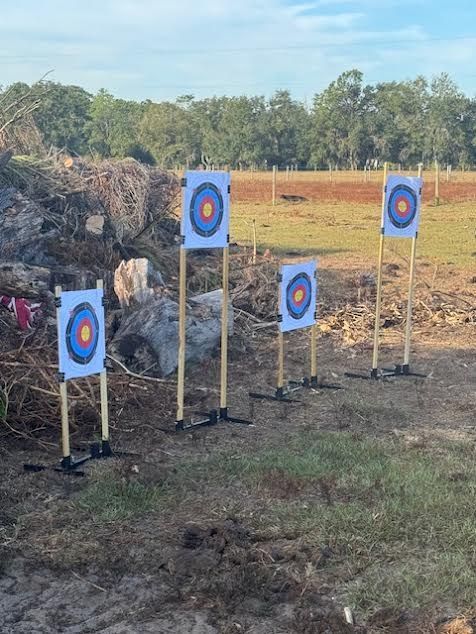
Why Do People Enjoy “The Firearm Sports” and why "Do People Want to Take Our Firearms Away From Law Abiding, Responsible People" Gregg Kielma Tactical K Training and Firearms 4/26/2026 Kielma states, "This debate has lasted for years. The gun control community wants to end our sport and hobby because, in their view: • We're bad people for owning guns. • We're irresponsible. • They don't want anyone armed. • They're afraid of what they don't understand. • They don't appreciate shooting as a sport." I do know this, people enjoy firearm sports because they offer a rare combination of discipline, focus, and personal growth that few activities can match. Whether it’s precision rifle, trap, or action shooting, these sports demand calm breathing, steady hands, and clear mind skills that build confidence and carry over into everyday life. The community is another major draw: responsible gun owners tend to be safety driven, respectful, and eager to help newcomers succeed. For many, the range becomes a place of mentorship, family bonding, and lifelong learning. At the same time, debates about firearms often create tension, and some lawmakers and advocacy groups argue for stricter regulations because they believe it will reduce crime or increase public safety. Others, however, feel these efforts unfairly target the very people who follow the law, train regularly, and store their firearms responsibly. From that perspective, it can feel as though responsible owners are being lumped together with criminals, even though their behavior, mindset, and values are completely different. This disconnects between those who see firearms as a disciplined sport and personal responsibility, and those who view them primarily through the lens of risk drives much of the ongoing debate. Gregg Kielma

Ammunition Quality and Why It Matters: Let’s Take a LOOK! Gregg Kielma Tactical K Training and Firearms 4/26/2026 Ammunition matters because it is the heart of every firearm’s performance, safety, and purpose. It determines how reliably a firearm functions, how accurately it shoots, and how responsibly we use it in training, hunting, or self-defense. Ammunition is far more than a simple component it is a complete system made up of the bullet, casing, primer, and propellant, each playing a critical role in how a round ignites, burns, seals the chamber, and ultimately sends a projectile downrange. When the primer ignites the propellant, rapidly expanding gases push the bullet through the barrel at high velocity, and the design of each component influences accuracy, recoil, and terminal performance. From a practical standpoint, choosing the right ammunition is essential for safety and effectiveness. Different tasks demand different types of rounds: full metal jackets for training, hollow points for self-defense due to controlled expansion, soft points for hunting, and specialized loads for shotguns depending on the game or purpose. Using the wrong ammunition can damage a firearm, cause malfunctions, or create dangerous over penetration risks. Matching ammunition to the firearm’s caliber and intended use is a foundational responsibility for every gun owner. Ammunition also matters because it directly affects ethical and responsible shooting. Hunters rely on rounds that deliver clean, humane results. Instructors and competitors depend on consistent, reliable ammunition to build skill and confidence. Law abiding citizens who carry for protection choose ammunition designed to stop a threat while reducing unintended harm. Every one of these decisions reflects a commitment to safety, discipline, and respect for the power we hold. Beyond performance, ammunition carries legal and regulatory significance. Caliber classifications, bullet types, and even certain expanding rounds are regulated in various jurisdictions. Proper identification and understanding of ammunition types support compliance, safe storage, and responsible ownership. Kielma’s Parting Shot: Ammunition matters because it represents the evolution of firearms themselves. From ancient projectiles to modern engineered cartridges, advancements in ammunition have shaped accuracy, reliability, and capability across civilian, sporting, and military contexts. Understanding ammunition isn’t just technical knowledge it’s part of being a responsible, informed firearm owner who values safety, precision, and the discipline that comes with training. Gregg Kielma
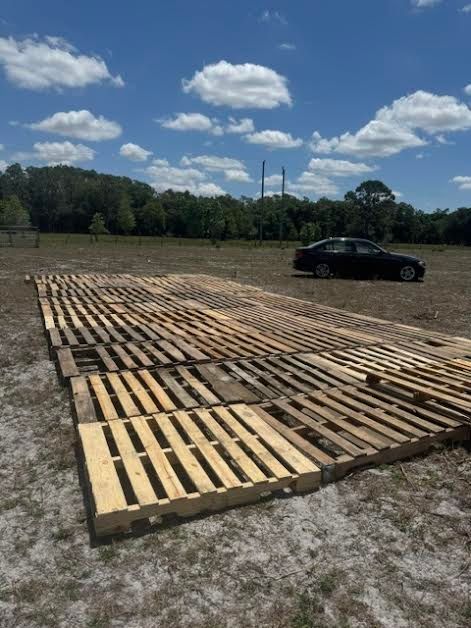
My Private 150 Yd Range Base is Down! The Plan Comes Together! Gregg Kielma 4/25/1016 Friday afternoon, 4/24/2026, I put in a solid 6 hours leveling and laying down the base that will support the shooting platform for my 150‑yard range. It was one of those jobs that looks simple, until you’re knee‑deep in it, but the base is in and ready for the next step. The plywood deck goes in on May 9th, along with the outdoor carpet that will be applied to the decking, and once that’s done, the platform will finally be completed. Note to self: sugar sand will absolutely get your truck stuck—ask me how I know. LOL Gregg Kielma