

Gregory Kielma • June 30, 2024
Firearms Safety…Tasks To Never Forget
Firearms Safety…Tasks To Never Forget
Gregg Kielma
Firearms are intertwined with the American culture, and the love affair with guns is undeniable. There lies a responsibility that is sometimes overlooked or forgotten. Safe gun ownership guidelines exist to ensure it can be used responsibly. Here are 15 mistakes you shouldn’t make as a gun owner.
Says FFL and Firearms Instructor Gregg Kielma, please remember the rule governing safe firearm handling. Don’t know or understand them? Take a class and be prepared. Call, Tactical K Training and firearms to schedule a class today.
#1- Underestimating the Importance of Firearm Education
Continual education and training are fundamental pillars of accountable gun ownership. Failing to seek out training opportunities or taking the need for ongoing skill development lightly impacts the ability to handle guns effectively. People may lack essential knowledge regarding firearm safety, marksmanship techniques, or regulations, increasing the likelihood of accidents or legal violations.
#2-Disregarding Proper Training
Without adequate training, individuals may mishandle guns, misjudge situations, or fail to respond appropriately in emergencies, increasing the likelihood of accidents. When paired with improper training, a momentary misjudgment can have irreversible consequences, so ensure you’re adequately prepared to handle the gun you carry.
#3- Engaging in Unauthorized Firearm Modification
Modifying guns can be tempting for some gun owners seeking to customize or enhance their guns’ performance or appearance. However, improper modifications can render weapons unsafe, increasing the risk of accidents. They also void warranties and violate regulations governing gun usage.
#4- Improper and Unsafe Firearm Transportation
Transporting guns without proper securing or failing to follow regulations regarding the transportation of weapons can result in liabilities or accidents. Improperly secured firearms may shift or become accessible during transit, increasing the risk of accidental discharges or thefts. It can also lead to citations and fines.
#5- Neglecting Proper Storage
Safe storage of guns is paramount to accountable gun ownership. Failing to do so increases the risk of unauthorized access, whether by curious children, inexperienced individuals, or potential intruders. A lapse in storage protocol can swiftly turn a moment of oversight into a lifetime of regret.
#6-Ignoring Regular Maintenance
Maintenance is the lifeblood of gun functionality. Ignoring routine upkeep, such as cleaning and lubrication, can compromise a firearm’s reliability and performance. A neglected gun is more prone to malfunctions and misfires, jeopardizing the user’s safety and that of anyone nearby.
#7- Mixing Guns with Intoxication
Alcohol and firearms are a dangerous combination, yet the temptation to mix them persists for some. Intoxication impairs judgment, coordination, and cognitive function, rendering individuals unfit to handle weapons safely. Furthermore, the legal ramifications of using guns under the influence lead to severe penalties, including criminal charges.
#8- Engaging in Reckless Behavior
Recklessness with guns can lead to accidental discharges, injuries, or even fatalities. Moreover, such behavior undermines the credibility of trustworthy gun owners and fuels misconceptions about weapons in society. By exercising caution in every interaction with weapons, gun owners uphold the integrity of the firearm community.
#9- Neglecting Legal Responsibilities
Owning a gun comes with legal obligations that must not be overlooked. Failing to obtain necessary permits or properly registering guns can result in penalties. Ignorance of the law is not an excuse, and failing to adhere to requirements can lead to confiscation of weapons, fines, or even imprisonment.
#10- Not Adhering to Firearm Ethics
Disregarding gun ethics, such as engaging in illegal or unethical hunting practices or using weapons to intimidate or harass others, undermines the principles of respect and integrity that should guide gun ownership. By demonstrating respect for wildlife, property, and fellow individuals, gun owners uphold the values of integrity within the community.
#11- Neglecting Mental Health Awareness
Signs of mental distress or failing to secure guns in households with those experiencing mental health challenges can have devastating consequences. Untreated mental illness coupled with access to firearms increases the risk of self-harm, harm to others, or accidental shootings. Responsible gun owners can promote their well-being and that of their communities.
#12- Failing to Practice Firearm Etiquette in Public Spaces
Owners must exercise discretion and courtesy when carrying or displaying weapons in public spaces. Brandishing guns in a threatening manner or behaving aggressively while armed can escalate tensions and provoke fear or alarm among people. It also violates local laws, leading to legal repercussions and public backlash.
#13- Succumbing to Peer Pressure or Influence
Gun ownership requires independent judgment and adherence to personal values and principles. Succumbing to peer pressure can lead to reckless behavior, accidents, or violations of safety rules. By maintaining independence of thought and refusing to compromise on safety principles, trustworthy gun owners uphold the standards of responsible gun ownership.
#14- Neglecting Firearm Inspection and Function Testing
Regular inspection and function testing of guns are essential for ensuring their reliability and performance. Failing to verify proper cycling and operation of weapons before use increases the risk of malfunctions or misfires during critical moments. By incorporating regular inspection and function testing into their maintenance routines, accountable gun owners minimize the risk of gun malfunctions.
#15- Always do the right thing, be a responsible firearm owner
Think, practice and train with a qualified instructor. Your life may depend on it. Be safe my friends.

DOJ Pam Bondi Scranton Man Sentenced To 12 Years For Possession Of A Machine Gun Tuesday, February 24, 2026 U.S. Attorney's Office, Middle District of Pennsylvania SCRANTON - The United States Attorney’s Office for the Middle District of Pennsylvania announced that Naim Mustafa House, age 28, of Scranton, Pennsylvania, was sentenced on February 24, 2026, to 144 months’ imprisonment by United States District Judge Karoline Mehalchick for possession with intent to distribute marijuana and possession of a machine gun. According to United States Attorney Brian D. Miller, on July 8, 2024, Scranton Police Officers initiated a traffic stop on a vehicle that House was a passenger. House fled on foot and was found hiding under a rear porch of a residence. During a search incident to arrest, police found marijuana packed for resale on his person and inside his backpack found 30 additional grams of marijuana and a Glock 7, 9mm handgun equipped with a device to transition the firearm from a semiautomatic firearm into a fully automatic firearm. The firearm also had an extended magazine containing 10 rounds of ammunition. The Bureau of Alcohol, Tobacco, Firearms and Explosives and the Scranton Police Department investigated the case. Assistant United States Attorney Jenny P. Roberts prosecuted the case.
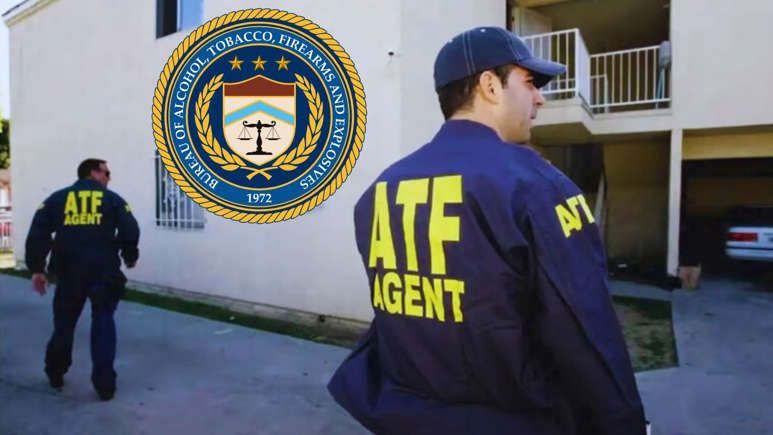
Brazilian National Unlawfully in the United States Sentenced for Selling 14 Firearms Without a License Thursday, February 26, 2026 U.S. Attorney's Office, District of Massachusetts Defendant sold AR-15 style rifles and large capacity magazines BOSTON – A Brazilian national unlawfully residing in Worcester has been sentenced to prison for selling firearms without a license. Joao Vitor Dos Santos Goncalves Pimenta, 21, was sentenced by U.S. District Judge Richard G. Stearns to 27 months in prison. The defendant is subject to deportation upon completion of the imposed sentence. In August 2025, Goncalves Pimenta pleaded guilty to one count of engaging in the business of dealing firearms without a license. Between July and September 2024, Goncalves Pimenta sold 14 firearms without the required license in exchange for cash. The firearms included pistols and AR-15-style rifles and large capacity magazines. United States Attorney Leah B. Foley; Thomas Greco, Special Agent in Charge of the Bureau of Alcohol, Tobacco, Firearms and Explosives, Boston Field Division; Michael J. Krol, Special Agent in Charge of Homeland Security Investigations in New England; and Patricia H. Hyde, Acting Field Office Director, Boston, U.S. Immigration and Customs Enforcement’s Enforcement and Removal Operations made the announcement today. Valuable assistance was provided by the Massachusetts State Police and the Revere Police Department. Assistant U.S. Attorneys Michael J. Crowley and John Reynolds of the Organized Crime & Gang Unit prosecuted the case

Gregg Kielma A Message of Gratitude Gregg Kielma Tactical K Training and Firearms 2/28/2026 To everyone, my friends, family and new friends that do not know me, who have never known me and trusted me with your firearms training—thank you. To show my appreciation, I am having a pig roast at my outdoor range where you trained. The new range is located at the same location and will be ready for use in April. NOTE: I have to count on the front-end loader company to show up. The date of the pig roast will be in the early part of May. Please keep checking back to the website for more information or feel free to call me. Whether you were brand new to shooting, sharpening advanced skills, training with family, or preparing for real world responsibility, you chose to spend your time with me on the range. That trust is something I never take lightly. Every class, every question, every moment of growth reminds me why I do this. You’ve helped build a community centered on safety, responsibility, and confidence—and I’m grateful for every one of you. Thank you for attending. Thank you for learning. Thank you for trusting me with something so important. I’m honored to be part of your journey. More training, more growth, and more safe, responsible gun ownership ahead. Gregg Kielma Tactical K Training and Firearms 941 737-6956

Tips for Purchasing Your First Firearm By Gregory Kielma, Tactical K Training & Firearms 02/27/28 Buying a firearm is a serious decision, and it should always start with purpose, not impulse. The right firearm is the one that fits your needs, your skill level, and your commitment to safe, responsible ownership. These are the same principles I teach every student who comes through my range. Know Your Purpose Before you ever step into a gun shop, be clear about why you’re buying a firearm. Your intended use drives everything else. • Personal protection: Look for reliability, manageable recoil, and a platform you can control under stress. • Home defense: Full size pistols, shotguns, or pistol caliber carbines offer better stability and capacity. • Recreational shooting: Choose something comfortable, affordable to shoot, and enjoyable to train with. • Hunting: Caliber and platform depend on the game and the environment. A firearm chosen for the wrong purpose becomes a frustration instead of a tool. Fit Matters More Than Brand I tell every student the same thing: the gun has to fit you. Grip angle, trigger reach, weight, and sight picture all affect your ability to shoot safely and accurately. Don’t buy based on what your buddy carries or what’s trending online. Handle several options. If possible, shoot them. The right firearm will feel natural in your hands. Prioritize Reliability A defensive firearm must work every time. Look for: • A proven track record • Simple, intuitive controls • Quality construction • Readily available magazines, holsters, and parts A reliable firearm builds confidence — and confidence builds safe habits. Understand the Legal Requirements Every firearm purchase comes with legal responsibilities. Background checks, age requirements, waiting periods, and carry laws vary by state. Know the rules before you buy. Responsible ownership starts with compliance. Training Is Not Optional Owning a firearm doesn’t make you prepared — training does. Professional instruction helps you build safe habits, understand your equipment, and make sound decisions under stress. I always recommend new shooters take a class before buying; it often saves time, money, and frustration. Plan for Secure Storage A firearm is only as safe as the person controlling access to it. Safes, lockboxes, and other secure storage options protect children, guests, and unauthorized adults. Safe storage is part of responsible ownership, not an afterthought. Kielma’s Parting Shot Good gun shops welcome questions. If something doesn’t make sense, ask. If a salesperson can’t explain a feature clearly, that’s a red flag. You’re not buying a toy — you’re buying a tool that demands respect and understanding.

Why Every Home and Business Needs a Designated Outdoor Meeting Point By Gregg Kielma-Tactical K Training and Firearms 2/24/26 When an emergency strikes, whether it’s a fire, a home invasion, or a natural disaster — chaos is the enemy. People make poor decisions when they’re scared, disoriented, or unsure of what to do next. One of the simplest and most effective ways to bring order to a crisis is to establish a predetermined outdoor gathering location where everyone can meet and be accounted for. Let's Take a LOOK This single step can save lives. Why a Designated Meeting Point Matters 1. Accountability Prevents Tragedy In an emergency, responders need to know whether someone is still inside a structure or in harm’s way. If family members, employees, or visitors scatter in different directions, it becomes nearly impossible to know who is safe and who may still need help. A designated meeting point gives you a quick, reliable way to confirm everyone’s status. 2. Reduces Panic and Confusion Emergencies create adrenaline, and adrenaline creates tunnel vision. People may run without thinking, hide, or freeze. When everyone knows exactly where to go, it removes guesswork and gives them a clear, simple action to follow. 3. Helps First Responders Do Their Job Firefighters, law enforcement, and rescue personnel rely on accurate information. If you can confidently say, “Everyone is out and accounted for,” they can focus their efforts where they’re needed most. If someone is missing, responders can act immediately instead of wasting precious minutes searching blindly. 4. Works for Every Type of Emergency A meeting point isn’t just for fires. It’s equally valuable during: • Home invasions (after escape) • Severe weather events • Gas leaks • Structural failures • Any situation requiring evacuation No matter the threat, the principle stays the same: get out, get safe, get together. How to Choose the Right Location A good meeting point should be: • Far enough away to avoid danger from fire, debris, or responding vehicles • Visible and easy to describe (e.g., a large tree, mailbox, or corner of the property) • Accessible from multiple exit routes • Safe from traffic or secondary hazard Take attendance make certain everyone is accounted for. For businesses, consider a location that accommodates groups and doesn’t interfere with emergency operations. Make It Part of Your Safety Plan A meeting point only works if everyone knows it. That means: • Discussing it with family members or employees • Posting it in visible areas (break rooms, near exits, etc.) • Including it in your emergency action plan • Practicing it during drills Repetition builds confidence. Confidence saves lives. Kielma’s Parting Thoughts Preparedness isn’t complicated — it’s intentional. A predetermined outdoor gathering location is one of the simplest, most effective tools you can put in place to protect the people you care about. In a moment where seconds matter and emotions run high, having a clear plan brings calm, clarity, and control.

Fire Extinguisher Safety for Homes and Businesses By Gregg Kielma-Tactical K Training and Firearms.com 02/22/2026 Fire extinguishers are one of the simplest and most effective tools we have for stopping a small fire before it becomes a life changing disaster. Whether at home or in a business, having the right extinguisher—and knowing how to use it—can make all the difference. Choose the Right Extinguisher Not all extinguishers are the same. For most homes and small businesses, a multi purpose ABC extinguisher is the best choice because it covers common fire types: • A: Ordinary combustibles (wood, paper, cloth) • B: Flammable liquids (grease, fuel, oils) • C: Electrical fires Larger facilities or specialized environments may require additional extinguishers, but ABC units are the foundation. Placement Matters An extinguisher is only useful if you can reach it quickly. Keep them: • Near exits • In kitchens, workshops, and garages • In high risk areas like break rooms or mechanical rooms Avoid placing extinguishers too close to the hazard itself—you want to be able to approach safely. Know How to Use It In an emergency, stress takes over. That’s why simple training is essential. The PASS method is easy to remember: • Pull the pin • Aim at the base of the fire • Squeeze the handle • Sweep side to side Just as important: if the fire is spreading, producing heavy smoke, or you feel unsafe, evacuate immediately and call 911. Inspect Regularly Extinguishers require routine checks. At least once a month, make sure: • The pressure gauge is in the green • The pin and tamper seal are intact • The extinguisher is clean, accessible, and undamaged Businesses should also follow required annual inspections and maintenance schedules. Kielma’s Parting Shot: Preparedness Saves Lives A fire extinguisher is more than a piece of equipment—it’s a layer of protection for your family, employees, and property. Investing a few minutes in training and maintenance can prevent injuries, reduce damage, and give you the confidence to act when seconds matter. Gregg Kielma

Three Teens Arrested in Armed Robbery of Sarasota Gas Station Post Date:02/21/2026 SARASOTA – Three people have been arrested by Sarasota police and are facing felony charges in connection with an armed robbery that happened Wednesday, Feb. 18. Pursuant to Florida State Statute 985.04 (2)(a)1., information about juveniles charged with felonies is public record. Christopher Woo-Piner, 18, of Sarasota; Roberto Gonzalez-Ramos, 16, of Sarasota; and Samuel Medina-Camacho, 15, of Sarasota, were arrested on Friday, Feb. 20. They are facing felony charges of armed robbery with a firearm. On Feb. 18, at approximately 10:30 p.m., officers responded to the 3500 block of Fruitville Road for a reported armed robbery at a gas station. When officers arrived, the employee working shared that three people entered the store, robbed him at gunpoint and left the store. Surveillance video shows three people entering the store. One person is seen walking around the front counter and pointing a handgun with an extended magazine towards the victim. The suspect is then seen pointing the gun at the victim as he removed cash from the register. At the same time, the two other people are seen taking merchandise from store shelves. All three people ran from the store. A significant amount of cash and merchandise was stolen. “Crime is not tolerated in our city,” said Chief Rex Troche. “Our officers and detectives began investigating immediately upon dispatch. In less than 48 hours, three people were identified and arrested. If you commit a crime in the City of Sarasota, we will find you and you will be arrested,” said Chief Troche. This case remains an active investigation. Anyone with information is asked to call the Sarasota Police Department Criminal Investigations Division at 941-263-6070 or remain anonymous and call Crime Stoppers of Sarasota County at 941-366-TIPS (8477).

What a Good Concealed Carry Gun Should Look and Feel Like: My Perspective By Gregg Kielma-Tactical K Training and Firearms 2/17/2026 Choosing a concealed carry firearm isn’t about trends, brand loyalty, or what someone on the internet says is “the best.” It’s about selecting a tool that fits your body, your training level, and your defensive needs. After years of teaching responsible gun owners, I’ve learned that the right concealed carry gun shares a few unmistakable qualities—both in how it looks and how it feels in the hand. It Should Look Purpose Built, Not Flashy A good, concealed carry gun isn’t a showpiece. It’s a defensive tool. From my perspective, the ideal CCW firearm has: • Clean, snag free lines that won’t catch on clothing during the draw. • A modest profile—not oversized, not underpowered, just balanced for daily carry. • Durable, no nonsense finishes that hold up to sweat, humidity, and constant holster contact. • Simple, intuitive controls that don’t require fine motor skills under stress. A carry gun should visually communicate reliability. Nothing about it should look fragile, overly complicated, or designed for anything other than personal protection. It Should Feel Like an Extension of Your Hand The “feel” of a concealed carry gun is where most people make or break their choice. A proper CCW firearm should: • Seat naturally in your grip without forcing your wrist into awkward angles. • Offer enough grip texture to stay secure under stress, but not so aggressive that it tears up clothing or skin. • Balance well—not nose heavy, not top heavy, just stable and predictable. • Provide a trigger you can manage consistently, with a clean break and a reset you can feel. If the gun feels like you’re fighting it, it’s the wrong gun. A carry firearm should disappear into your hand and allow you to focus on the fundamentals, not the ergonomics. It Should Shoot Better Than Its Size Suggests Small guns are harder to shoot well. That’s reality. A good, concealed carry gun overcomes that by offering: • Manageable recoil that doesn’t punish the shooter. • Sights you can actually see, not tiny nubs that disappear in low light. • Predictable accuracy—not match grade, but consistent and confidence building. • A controllable frame that allows fast follow up shots without wrestling the gun. If a student can’t keep rounds on target under stress, the gun isn’t helping them—it’s hindering them. It Must Fit the Mission A concealed carry gun should match the owner’s lifestyle and training commitment. That means: • It conceals well in your actual clothing, not just in theory. • It works with a quality holster, not a bargain-bin afterthought. • It’s a gun you’re willing to train with regularly, not one that hurts to shoot or feels intimidating. • It’s reliable with defensive ammunition, not just range ammo. A firearm that doesn’t fit your daily life won’t get carried. And a gun that isn’t carried can’t protect you. Kielma’s Parting Shot: A good concealed carry gun doesn’t need to impress anyone. It needs to be safe, reliable, and suited to the person who carries it. When a firearm looks clean, feels natural, and performs consistently, it becomes a trustworthy defensive tool—not a burden. That’s the standard I teach, and it’s the standard every responsible gun owner deserves to follow. Gregg Kielma

Bloody 'trans' rampage at boys' hockey game brought to an end by 'Good Samaritan' Joseph MacKinnon February 17, 2026 This is why Rhode Island firearms laws are bad. Could a well-armed citizen might have been stopped the rampage sooner? The dead shooter, who police indicate went by a female name, appears to have rationalized 'trans' rampages. A week after a trans-identifying man went on a rampage in Western Canada, killing six children and two adults, another man who masqueraded as a woman allegedly took aim at innocents — this time at a local skating rink in Pawtucket, Rhode Island. Families, students, and supporters flocked to the Dennis M. Lynch Arena on Monday afternoon to watch a boys' high school hockey game between the Blackstone Valley School and Coventry-Johnson co-op teams. Pawtucket Mayor Donald Grebien noted that "what should have been a joyful occasion" was "instead marked by violence and fear." A man dressed as a woman and believed to have been in the possession of multiple weapons fatally shot two people and left another three victims in critical condition. At least two of the victims are reportedly children. Sign up for the Blaze newsletter Coventry Public Schools revealed on Monday evening that all of its students present at the incident "have been accounted for and are safe." Providence Country Day School and St. Raphael Academy also indicated their students were safe. Arena footage shows players rushing off the ice and fans taking cover as roughly 13 gunshots ring out. The Providence Journal noted that 11 seconds after the first series of shots, a final shot can be heard. Police responding to a report of an active shooter around 2:30 p.m. were on the scene within a minute and a half; however, the blood-letting had apparently already come to an end. Pawtucket Police Chief Tina Goncalves indicated that "a Good Samaritan stepped in and interjected in this scene, and that's probably what led to a swift end of this tragic event." The "Good Samaritan" who was unarmed, apparently tried to "subdue" the shooter, who police said died from a self-inflicted gunshot wound. Sen. Jack Reed (D-R.I.) expressed gratitude for the first responders "who rushed to assist, as well as the good Samaritan who confronted and tried to disarm the shooter." Goncalves identified the shooter as Robert Dorgan, 56, and indicated that "he does go by the name of Roberta, also uses the last name of Esposito." The chief noted further that while his motive is presently unclear, "this was a targeted event" and "looked like it was a family dispute." A distraught woman who did not provide her name told WCVB-TV while exiting the PPD station that her father was the shooter. "He shot my family, and he's dead now," said the unidentified woman, adding that the shooter "has mental health issues." Court records reviewed by WPRI-TV reportedly show that Dorgan complained in 2020 to the North Providence Police Department that in the wake of his sex-rejection surgery, his father-in-law was trying to kick him out of the family house where Dorgan had lived for seven years. While the father-in-law was initially charged with intimidation of witnesses and victims of crimes and obstruction of the judicial system, the charges were later dismissed. The same year, Dorgan accused his mother of assaulting him and acting in a "violent, threatening, or tumultuous manner." Although his mother was charged with simple assault and battery and disorderly conduct, the case was similarly dismissed. Around the time of Dorgan's dispute with his father-in-law and mother, Dorgan's then-wife, Rhonda Dorgan, filed for divorce. While she initially cited "gender reassignment surgery, narcissistic + personality disorder traits" as the grounds for the divorce, WPRI indicates his ex-wife replaced those reasons with "irreconcilable differences, which have caused the immediate breakdown of the marriage." An apparently Rhode Island-based user on X who went by "Roberta Dorgano" posted on May 9, 2019, "Transwoman, 6 kids: wife — not thrilled." In a recent post, the user who the New York Post suggested was Robert Dorgan, noted, "I have a beloved RHONDA." In response to a Feb. 14 assertion by actor Kevin Sorbo that trans-identifying Rep. Sarah McBride (D-Del.) "is a man," the X user wrote, "Keep bashing us. but do not wonder why we Go BERSERK." Dorgan appears to be the latest addition to a growing list of recent trans-identifying mass shooters and would-be mass shooters. • A trans-identifying man murdered six kids and two adults in Tumbler Ridge, British Columbia, on Feb. 10. • A trans-identifying man shot up a Catholic church full of children in Minneapolis on Aug. 27, 2025, killing two children and injuring 30. • A male-identifying woman planned to shoot up an elementary school and a high school in Maryland in April 2024 but was stopped in time by police — then later convicted. • A trans-identifying teen stalked the halls of a school in Perry, Iowa, on Jan. 4, 2024, ultimately murdering a child and an adult and wounding several others. • A trans-identifying woman stormed into a Presbyterian school in Nashville on March 27, 2023, murdering three children and three adults.

How Long Do You Shoot? Kielma advises, until the threat is over. No more no less. Be the reasonable person. The consequences can be devastating. Police live by different rules, just ask Polk County Florida Sherrif Grady Judge. This response is from an avid reader of my blog. My Question: What would you do? Please comment below! A few years ago a couple of teens tried to rob a drug store in broad daylight. The pharmacist/store owner .. an elderly man…. pulled out his own gun and shot one of the intruders. The other ran off. In the store with him were 2 women. He took after the runner. Thinking about the 2 women and their safety before he went out the door he put another bullet in the one fallen…. killing him. He was not in anyway trained in such situations… he was running on adrenaline and fear. Making sure that the one on the floor was not a threat anymore to him or the 2 women. That elderly pharmacist was sentenced to life in prison. The weird thing is a few months later a guy went on a killing spree. He shot/killed some family members… Shot another guy and stole his truck. Doing all this while video posting on Facebook. The law finally caught up with him. The pickup was put out of service. The guy stepped out of the truck and was shooting at the police while walking towards them. ( This was all recorded from a police helicopter. ) The police shot and killed him. After he fell to the ground 3 lawmen emptied their pistols into him from about 30 feet. With a camera/body cam rolling… the one in front turned and looked into the camera and said… “ We had to make sure he was dead. “ That was law enforcement that did that… Men who are supposed to be trained in handling a situation like that. … “ Just to make sure. “… ( Just like what the pharmacist did. ) They were deemed heroes. From an Anonymous reader.